Figures relate to tax year 2025 (US)
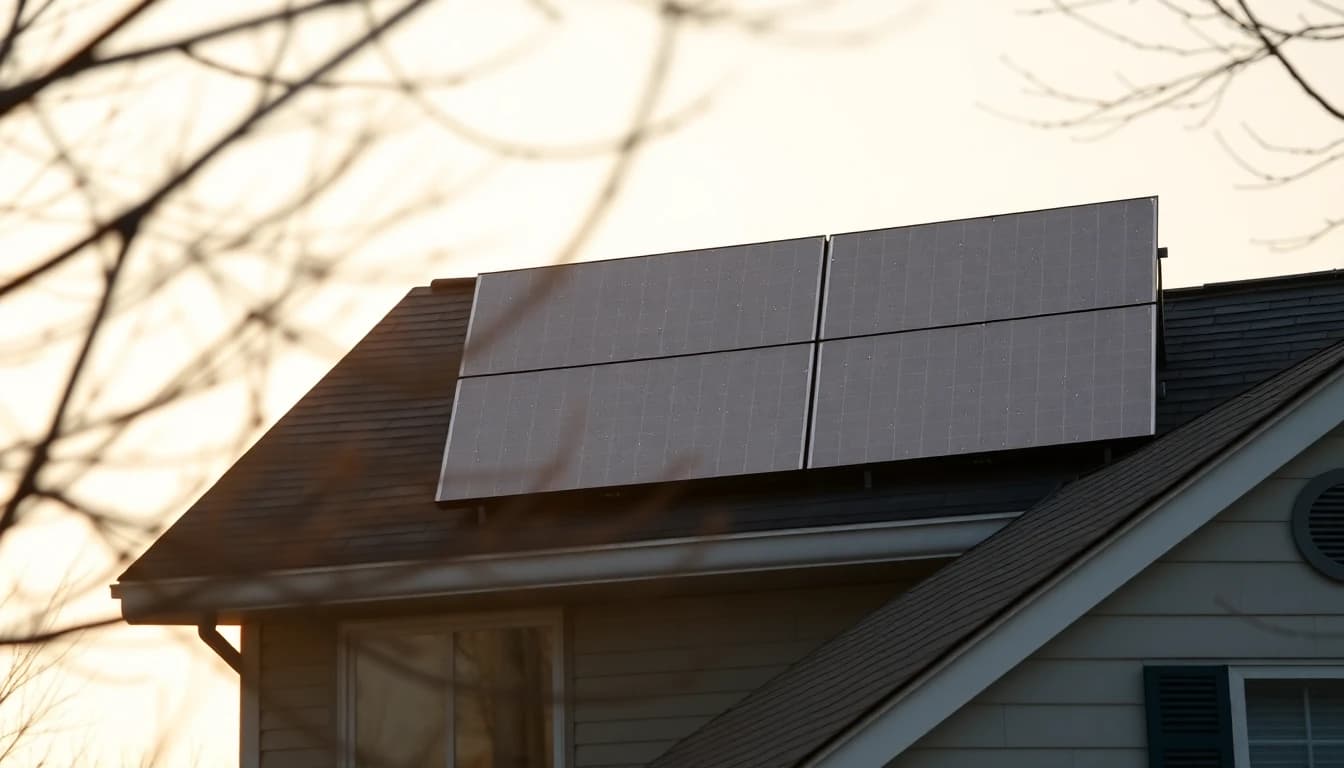
You fitted solar panels in Surrey and wondered whether the IRS would help pay for them. It will not. The American energy credits attach to American property, and a home in Britain never qualified for any of them.
But the question is more interesting than a flat no. Some Americans abroad still hold US property, still buy US vehicles, and still have unused credit sitting on an old return. So this guide covers what survived, what ended in 2025, and what you can still claim in 2026.
Key takeaways
- The energy credits attach to property in the United States, so a UK installation never qualified.
- Congress ended the main residential credits for work done after 31 December 2025.
- Clean vehicle credits ended earlier, for vehicles acquired after 30 September 2025.
- These credits are nonrefundable, so the foreign earned income exclusion often leaves nothing for them to reduce.
- Unused residential clean energy credit still carries forward, which is the live opportunity for most expats.
- Income for the vehicle credit adds back excluded foreign earnings, which catches people who claimed at the dealer.
What is a US energy credit?
It is a credit against federal income tax for specific work on American property. Three of them mattered here. The residential clean energy credit covered 30% of solar, wind, geothermal and battery costs. The improvement credit covered insulation, windows and heat pumps, while the vehicle credits covered electric cars from American dealers.
Each had its own rules, its own form and its own end date. According to IRS guidance, all three now sit in the past tense for new work. What remains is a set of tidying-up questions about energy credits already earned and returns already filed.
Do the energy credits apply to a UK home?
No, and this is the cleanest answer in the whole area. Both residential credits required the property to be a dwelling unit located in the United States. A house in Manchester fails that test however efficient the work was, and no treaty provision converts a British installation into a qualifying one.
The same logic applies to British grants running the other way. Money received under a UK scheme may still be relevant to your US return as income or as a reduction in basis. That is a separate question from the credits, and it catches people who assume the whole subject is purely British.
What ended, and when?
The 2025 legislation set hard cut-off dates rather than a phase-down. So the date on the invoice, or the date you took delivery of the car, now decides everything. Work that straddles the line often turns on the date the property entered service.
| Credit | What it covered | Last qualifying date | Carryforward |
|---|---|---|---|
| Residential clean energy | 30% of solar, wind, geothermal and battery storage | Expenditures through 31 December 2025 | Yes, unused amounts carry forward |
| Energy efficient home improvement | Insulation, windows, doors, heat pumps, capped at $1,200 or $2,000 a year | Property placed in service through 31 December 2025 | No |
| New and used clean vehicles | Up to $7,500 new, up to $4,000 used | Vehicles acquired through 30 September 2025 | No |
Those dates matter more than usual for people abroad. A credit with no carryforward is worth nothing in a year when the exclusion wiped out your US tax. The residential credit is the exception, and that exception is where most remaining value sits.
Why nonrefundable matters so much abroad
A nonrefundable credit can reduce your tax to zero, but it cannot produce a refund. Most Americans in Britain already pay more UK tax than their US liability. So after the foreign tax credit or the exclusion, the US bill is often zero before any energy credit is considered.
That is the quiet reason these energy credits disappoint expats. The credit is not denied. It simply has nothing left to reduce, and only the residential clean energy credit survives into a later year where the position might be different.
So the planning question with energy credits is not whether you qualify. It is whether you will ever have US tax for the credit to sit against, and our guide to the foreign earned income exclusion explains why that answer is so often no.
How do the energy credits interact with the foreign tax credit?
They sit in a queue, and the energy credit is near the back of it. The foreign tax credit comes off first on the return, which is exactly the credit most Americans in Britain rely on. By the time the energy credit is reached, there is frequently no liability left for it to touch.
That ordering explains a return we see often: a large credit on the form and no benefit on the bottom line. The tax has already gone.
There is a planning point buried in that. Choosing the foreign tax credit over the exclusion sometimes leaves a small American liability on purpose, and a deliberate liability can absorb a credit that would otherwise sit idle. That only helps where the credit carries forward, which now means the residential credit alone.
What can an expat still claim in 2026?
Three things, mostly. Work done in 2025 still belongs on a 2025 return, which many expats have not yet filed. Unused residential credit from earlier years carries forward to 2026. And you can still amend an earlier return inside the refund window if a credit went unclaimed.
- A 2025 return covering solar or battery work finished before the year ended.
- A vehicle delivered on or before 30 September 2025 but never claimed.
- Carryforward of residential clean energy credit from 2022, 2023 or 2024.
- An amended return for a year where the credit was simply overlooked.
- A correction where a dealer credit was taken but the income limit was breached.
How the exclusion can cost you the vehicle credit
This is the trap we see most often. The clean vehicle credit had income limits, set at $300,000 for joint filers and $150,000 for single filers. But the income test adds back foreign earned income you excluded under section 911.
So an American in London earning £200,000 may look well inside the limit on the face of the return. Add the excluded income back and the same person can sit outside it. The exclusion does not help here, because the test deliberately ignores it.
That matters because many buyers transferred the credit to the dealer at the point of sale. If the income test then fails, the amount comes back on the return as tax owed. In our practice that repayment arrives as a genuine surprise, usually a year after the car did.
A worked example
The numbers below are illustrative. Take an example: an American couple keep a house in Colorado, rent it out for part of the year, and stay in it each summer. They install solar in March 2025 costing $24,000, then move back to Britain in June.
The credit is 30% of the qualifying cost, so roughly $7,200. Their 2025 US tax after the foreign tax credit is only $1,100. They use $1,100 of the credit and carry the remaining $6,100 forward, which stays available for future years when US tax appears.
Had they fitted the same panels on a rented flat in Leeds, the credit would be zero. Same money, same technology, different country, no relief. Our guide to US property owned from Britain covers how the rest of that house reaches both returns.
How do you check whether a credit still reaches you?
Work backwards from the property and the date, then test the tax. The address decides eligibility, the invoice date decides which year it belongs to, and your US liability decides whether the credit does anything at all this year. Only then does the form matter.
- Confirm the property sits in the United States and that you used it as a residence.
- Find the date the work was completed, or the date you took delivery of the vehicle.
- Check that date against the cut-off for that particular credit.
- Rebuild your US tax for the year after the exclusion and the foreign tax credit.
- Apply the credit to any remaining liability, then carry forward what the rules allow.
- File Form 5695 with the return for the year in question, or amend that year.
What about home charging equipment?
A separate credit covered charging equipment installed at a property, and it ran on its own timetable rather than the one that closed the vehicle credits. New installations no longer qualify for energy credits. Anyone who fitted a charger while still living in America should check the date against the rules for that specific year.
The location rule applies here too. Equipment installed at a British address never qualified, however the invoice was worded. So the question is only ever about American property and the year the work finished.
Who among Americans abroad actually benefits?
A narrow group, but a real one. It includes people who keep US property they use themselves, people whose American tax survives the foreign tax credit, and people planning a move back inside the carryforward window. For everyone else the energy credits are a matter of record keeping rather than money.
Investment income shifts the picture as well. Someone living on a British salary while holding a large American brokerage account can still owe US tax on dividends and gains. In that position, a credit from a US home does real work rather than sitting unused.
Timing matters more than people expect. In our practice a credit earned in a year with no US tax gets written off mentally, even when the rules would have carried it forward. So the first thing worth checking is whether an old carryforward still exists at all.
Mistakes and penalties we see with energy credits
- Claiming a credit for work on a British home, which no version of the rules ever allowed.
- Treating the credit as a refund, when it can only reduce tax you actually owe.
- Missing the income add-back for excluded foreign earnings on a vehicle claim.
- Forgetting to carry forward unused residential credit from an earlier return.
- Claiming the full cost of a roof replacement rather than the qualifying solar portion.
- Losing an amendment because the refund window for that year has already closed.
The penalty exposure here is usually accuracy-related rather than dramatic. But a credit you repay with interest still stings, and a failed dealer transfer comes back in full. So the checking is worth doing before the claim, not after.
Does any of this change if you move back?
Yes, in one useful way. Carried-forward residential credit becomes valuable again once you have US tax to pay. Someone returning to America with unused credit from a pre-move installation can finally use it, provided the carryforward rules for that credit allow the year in question.
That is worth checking before you file the year of return. It is also worth checking before you sell the property, because the calculation behind the original claim may need revisiting. Our guide to moving to the US covers the wider timing questions.
The year of the move is the one to model carefully. A part-year American position can produce a liability that simply did not exist while you were abroad. That is precisely the liability a carried-forward credit can reduce, which makes the timing of the claim worth planning rather than leaving to chance.
How US UK Tax Accountants helps
We check three things: where the property sits, which year the work belongs to, and whether you have any US tax for the credit to reduce. Most of the value we find is in carryforwards and missed amendments rather than new claims. If you have US property or an unused credit, get in touch and we will tell you plainly whether it is worth pursuing, alongside your US federal returns.
Last reviewed 19 September 2026. This article is general information and not personal tax advice. The 2025 legislation changed these credits substantially, so check the position for your own year before filing.
Not sure where you stand?
Tell us what you hold across the US and UK. We come back with the scope and a fixed fee in writing, at no cost.
Get in TouchPrimary sources
Official guidance from the IRS, FinCEN and GOV.UK. Thresholds and rates on those pages are updated annually — check the current tax year before relying on a figure.
- IRS — Residential Clean Energy Credit (opens in a new tab)
- IRS — Energy Efficient Home Improvement Credit (opens in a new tab)
- IRS — Credits for new clean vehicles purchased in 2023 or after (opens in a new tab)
- IRS — Foreign Earned Income Exclusion (opens in a new tab)
- IRS — About Form 5695, Residential Energy Credits (opens in a new tab)